

A crowdfunded public inquiry into AUKUS is set to examine the submarine pact's costs, risks and secrecy as concerns grow over its viability and impact on Australia's sovereignty, writes DrBinoy Kampmark.
OF THE THREE countries involved inAUKUSthat most draining, useless and even pernicious of security pacts Australia has been the only country indifferent, even scoffing, about the need for an inquiry into its merits.
Unsurprisingly, both the U.S. and UK inquiries have found much to merit the project Australian taxpayer money has sluiced and soothed the submarine industrial base of both countries but have also expressed concern about their respective production rates of nuclear-powered submarines.
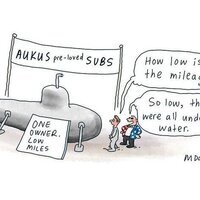
While the first pillar of the agreement promises, with mighty emptiness, that the Royal Australian Navy will receive three Virginia-class nuclear-powered submarines (SSNs), with the possible opportunity to acquire a further two, the prospect of their timely arrival looks increasingly doubtful.
The recent developments at theShangri-La Dialogueheld in Singapore that these will behand-me-downsfrom the U.S. Navy already suggest the lack of regard Australian personnel and their slavish representatives are held in. Add to this a joint as yet undesigned UK-Australian SSN design that will use U.S. technology and the chances that a fleet of these expensive hulks finding their way into the hands of Australian sailors looks damnably remote.
AUKUS: Australia gets what America can spareAustralia's AUKUS submarine plan is being reshaped by American and British constraints, raising questions about whether the promised leap in capability is quietly becoming a compromise.
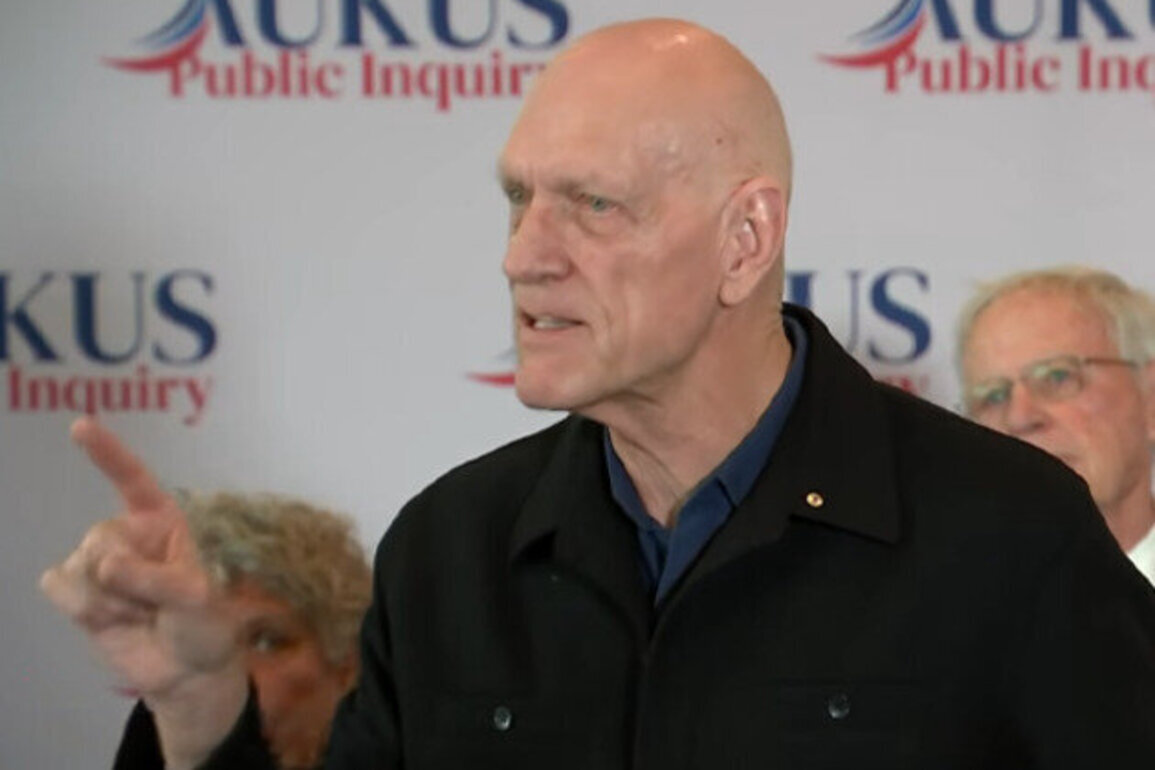
With the Canberra mandarins and political governors insisting that no official inquiry be conducted into AUKUS, it has fallen to those keen on a public inquiry to take up the mantle. The crowd-foundedAUKUS Public Inquiry, coordinated by the Australian Peace and Security Forum (APSF), will be led by several commissioners, spearheaded by former federal environment minister and frontman forMidnight Oil,Peter Garrett.
Former MPs, retired military and naval officers (these include former chief of the Australian Defence ForceChris Barrie), strategists and academics, human rights lawyers and union leaders promise to feature in this inquiry into the unpardonably foolish.
Inremarksmade on launching the Inquiry, Garret declared that AUKUS:
The Inquiry proposes to answer several salient, if self-evident, questions.
Will Australia, for instance, ever receive the sought-after and undeservedly celebrated submarines? Where and how will the toxic medium to high-level nuclear waste be stored? (Australia lacks a single facility suitable for that task.) How many actual jobs will be created in Australia and at what opportunity cost? (The conservative estimate of $368 billion is a ruinous one when considering what other parts of the Federal Budget will suffer as a result.) Why does Australia find itself in a situation where it will potentially join a war with the United States against China, its largest trading partner?
The last two questions concern the central soundness (or lack thereof) of AUKUS: whether sovereignty will be jeopardised (a moot point: it already has been) and whether the pact will turn the country into a nuclear target.
Other subsidiary matters will also fall within the purview of the Inquiry. Transferring nuclear technology in this manner not only sets a precedent of destabilising value but raises concerns about nuclear non-proliferation treaty commitments and the environmental costs arising from developing nuclear storage facilities. Governments in Australia have repeatedly failed to consult and engage local communities about such projects, which have usually been stymied in failed negotiations and costly litigation.
How the martial dictates of AUKUS risk corrupting the tertiary sector, particularly research and university institutions, is also a worry, given the tentacular nature of the military-industrial-university complex seen in countries such as the United States. Money-hungry university vice chancellors and their morally flabby inner circles can always be trusted to make their institutions and countries less secure if the price is right.
Then comes that most relevant ofconsiderations: Were credible and less costly alternatives to AUKUS properly assessed before the decision was made in secret?
Civil society groups have welcomed this long-awaited effort.
Rtd Army MajorCameron Leckie, spokesperson for the Independent and Peaceful Australia Network (IPAN),observed:
In Parliament, Independent MPAllegra Spenderraiseda Matter of Public Importance demanding that the Government be transparent about the risks to the delivery of AUKUS and how Australias national and security interests will be protected, especially in light of recent changes to contract terms.
AUKUS ties nuclear anchor around Australia's neckThree years ago, Anthony Albanese signed Australia up to quite possibly the worst deal in our history.
There were also emerging gaps in capability arising from the Collins-classLife-of-Type Extension program, intended to supposedly drag out the deployment of boats beyond their retirement.
Other parliamentarians, all Independents, includingSophie Scamps,Dai Le,Zali Steggall,Nicolette Boele,Kate ChaneyandMonique Ryan, also expressed similar reservations about AUKUS.
Pithily, Ryan, who represents the Melbourne federal seat of Kooyong,calledthe crowdfunded independent Inquiry into AUKUS a national embarrassment for the Government:
Even more heartily, there are rumblings of disquiet within the Australian Labor Government about the pact. Former cabinet ministerEd Husic, whose career as a frontbencher was scrapped, if only temporarily, by the factional fanaticism of his own party, is demanding afresh caucus voteon the agreement.
We are not going to get the deal that was promised, Husic toldSky News. He suspected a straitjacketed deal were the submarines ever to arrive.
Husiccontinued:
While his efforts to raise the issue on 2 June were dismissed by Prime MinisterAnthony Albaneseand the Minister for Defence IndustryPat Conroy, with the usual nonsense that AUKUS was more than just a submarine agreement, the number of dissenters is growing. May their numbers burgeon sooner rather than later.
DrBinoy Kampmarkwas a Cambridge Scholar and is a lecturer atRMIT University. You can follow Dr Kampmark@BKampmark.
Related Articles
- AUKUS: Australia gets what America can spare
- Australia didn't vote for this war, but it's fighting it anyway
- AUKUS ties nuclear anchor around Australia's neck
- Australias $300b AUKUS bet hinges on Britains submarine capacity
- Mark Carneys warning: Albanese is choosing weakness for Australia