


SYDNEY, June 8 (Xinhua) -- Researchers in Australia have developed an artificial intelligence (AI) system capable of detecting smuggled marine wildlife products, including shark fins, dried seahorses and sea cucumbers, in airport luggage scans.
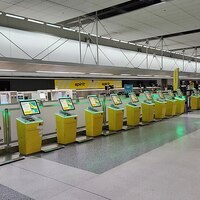
The study uses existing 3D X-ray CT airport scanners and a neural network to identify trafficked items concealed in baggage with 92 percent accuracy, according to a media release from the journal Frontiers in Ocean Sustainability, which published the research on Monday.
Marine wildlife trafficking, estimated to generate billions of dollars annually, poses a major threat to ocean ecosystems. Unlike more widely recognized wildlife crimes, such as ivory or rhino horn trafficking, illicit trade in marine species is harder to detect as items are often hidden in ordinary travelers' luggage or packages, the release said.
To train the algorithm, the team led by scientists at Australia's Macquarie University conducted nearly 300 scans using samples of marine wildlife trafficking seizures, simulating smugglers' tricks and real-life circumstances such as wrapping items in tin or clothes, or hiding them inside toys.
The system achieved detection rates of 95 percent for shark fins, 96 percent for seahorses, and 86 percent for sea cucumbers, researchers said.
They said the technology could support border enforcement efforts but emphasized it would complement, not replace, existing detection methods, noting limitations including false positives and uneven access to advanced 3D scanners.
"We can only mock up real-world trafficking scenarios based on what has been detected before. AI is not a silver bullet for detection, nor a replacement for human and sniffer dog detection," said Vanessa Pirotta of Macquarie University, the study's lead author.